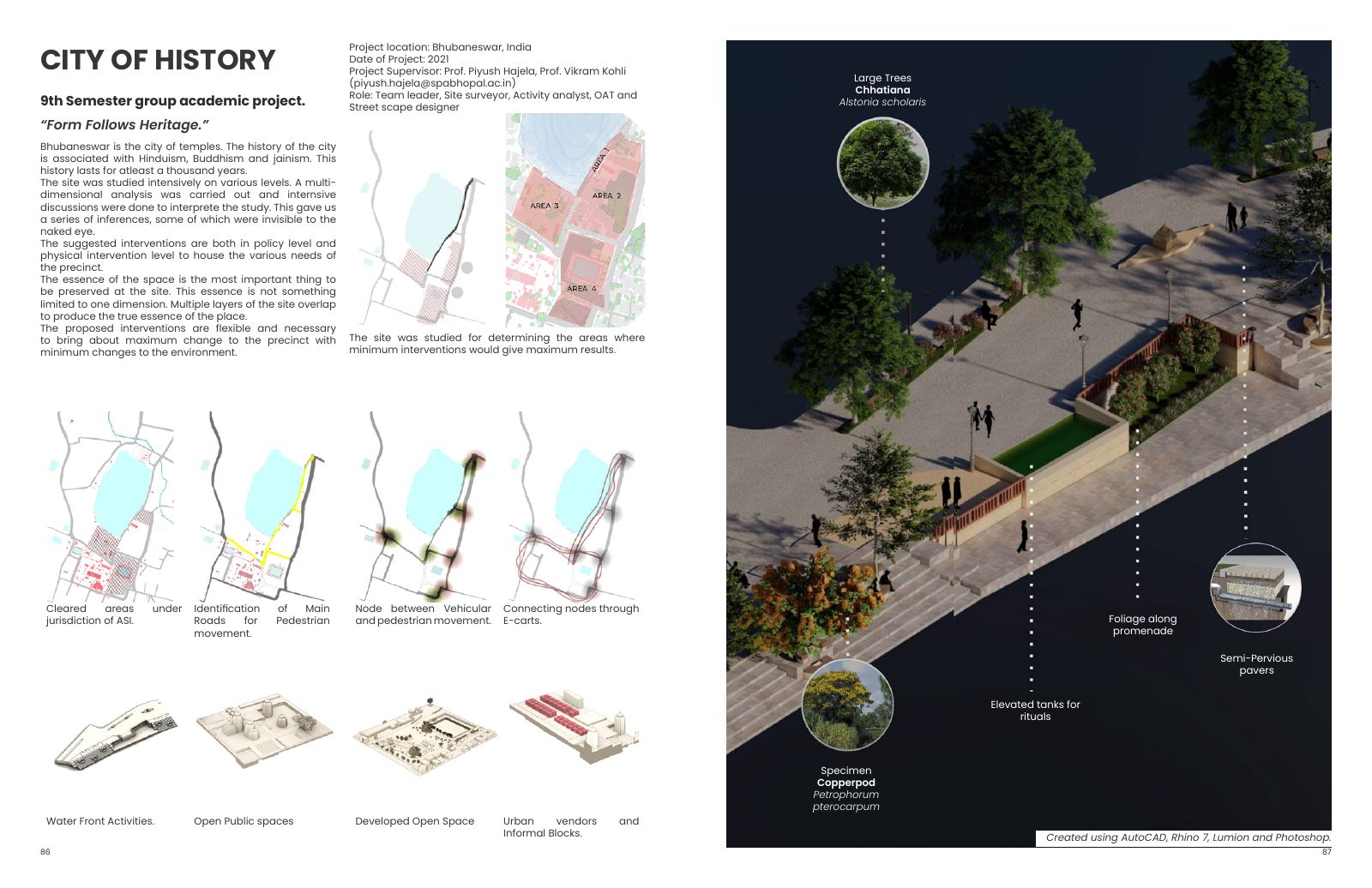
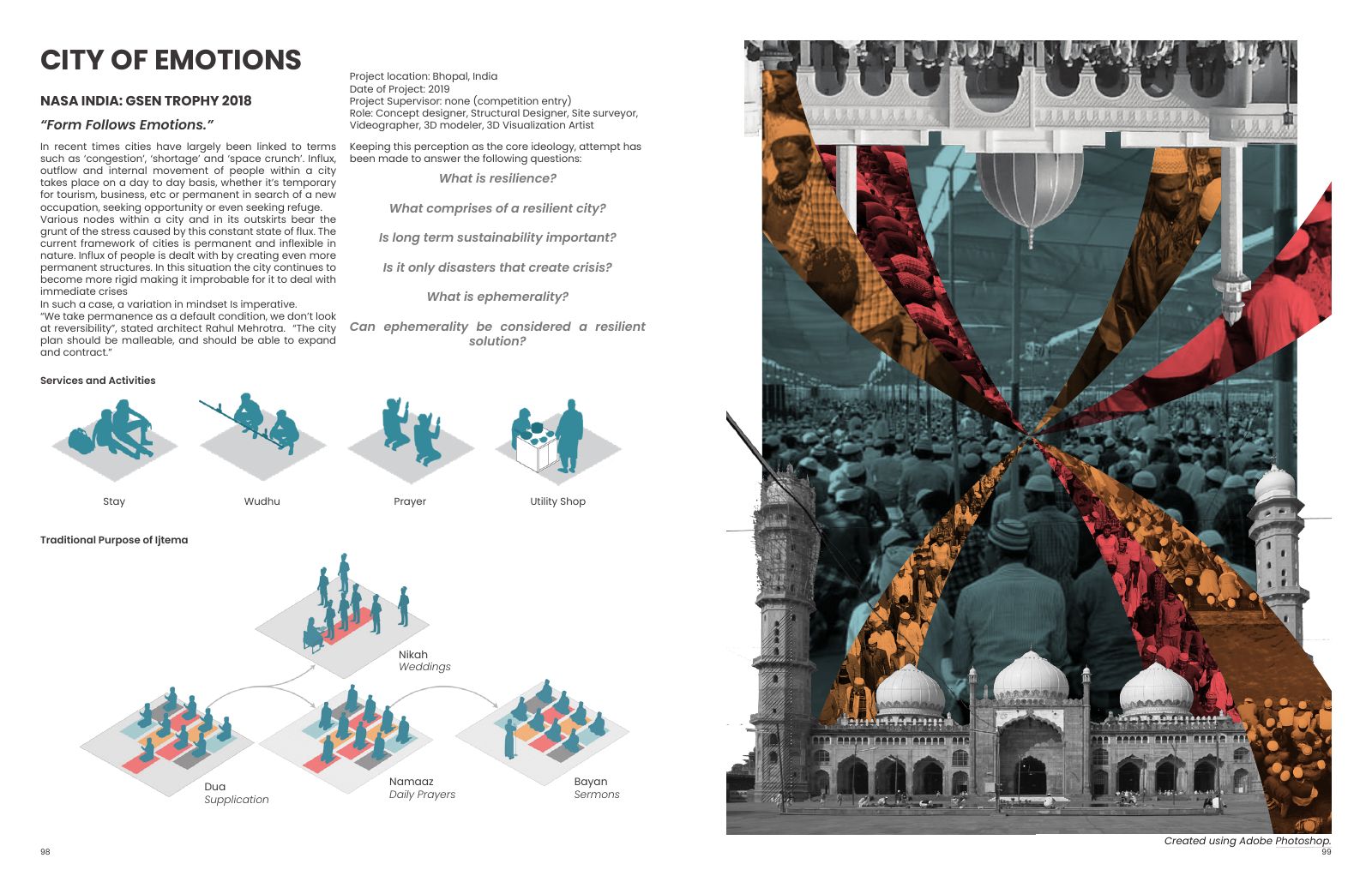
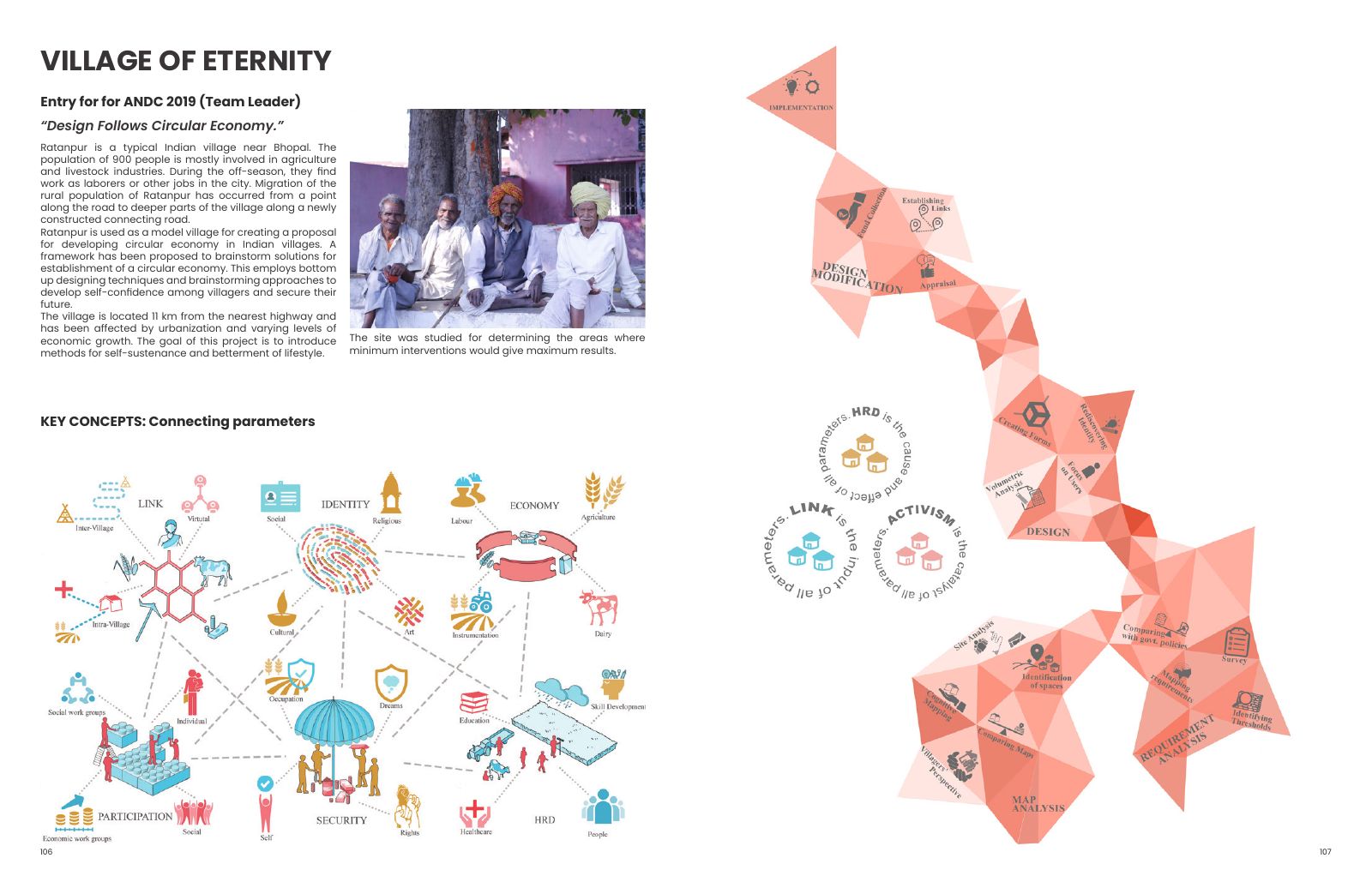
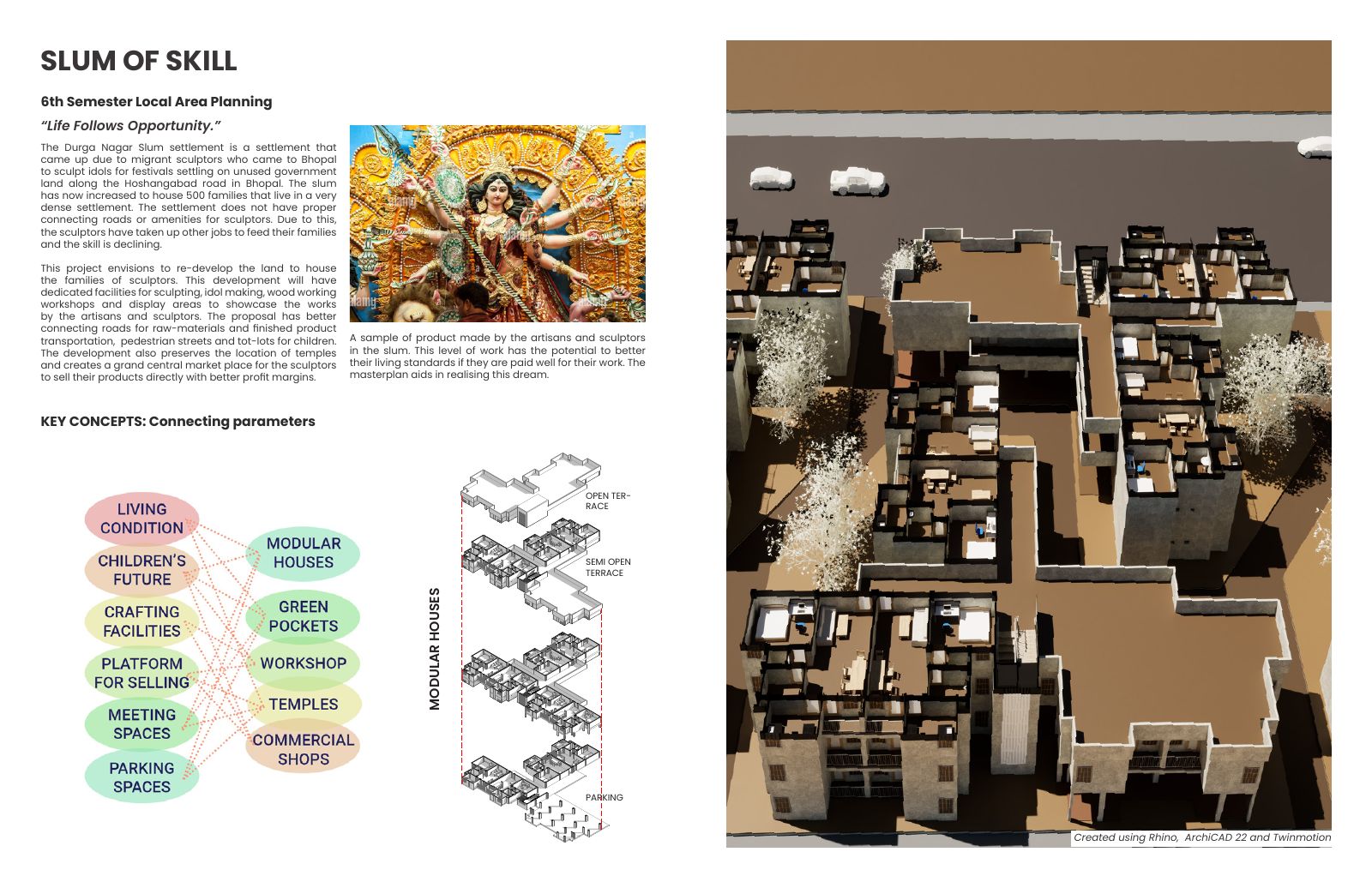
Urbanism Traditional Urban Design Urban design begins by understanding how history, activity, movement, ecology and livelihoods already shape a place. Method Read the place before drawing the intervention. We map physical form alongside daily and seasonal patterns of use. This reveals where spatial change, policy, movement or programme can work together. Proposals are organised as adaptable frameworks so that identity and existing social value are reinforced rather than erased. Portfolio studies Four scales of urban strategy. 01 Heritage precinct and public-realm strategy City of History A minimum-change heritage framework for the Lingaraj precinct, shaped by temples, movement, ritual, local enterprise and the water’s edge. View project → 02 Temporary-event urbanism and resilient infrastructure City of Emotions An adaptable urban framework for the Bhopal Ijtema, where temporary population, worship and services reshape the city for a limited period. View project → 03 Rural development and circular village economy Village of Eternity A bottom-up rural framework connecting agriculture, livestock, skills, shared infrastructure and local enterprise into a circular village economy. View project → 04 Community upgrading and artisan-led local planning Slum of Skill A community-upgrading proposal that links safer housing and public space with the livelihoods and cultural skills of Durga Nagar’s sculptors. View project → Next step Build a framework around the place. Share the site, stakeholders and policy context. We will define the analysis needed before design moves are fixed. Start a conversation →