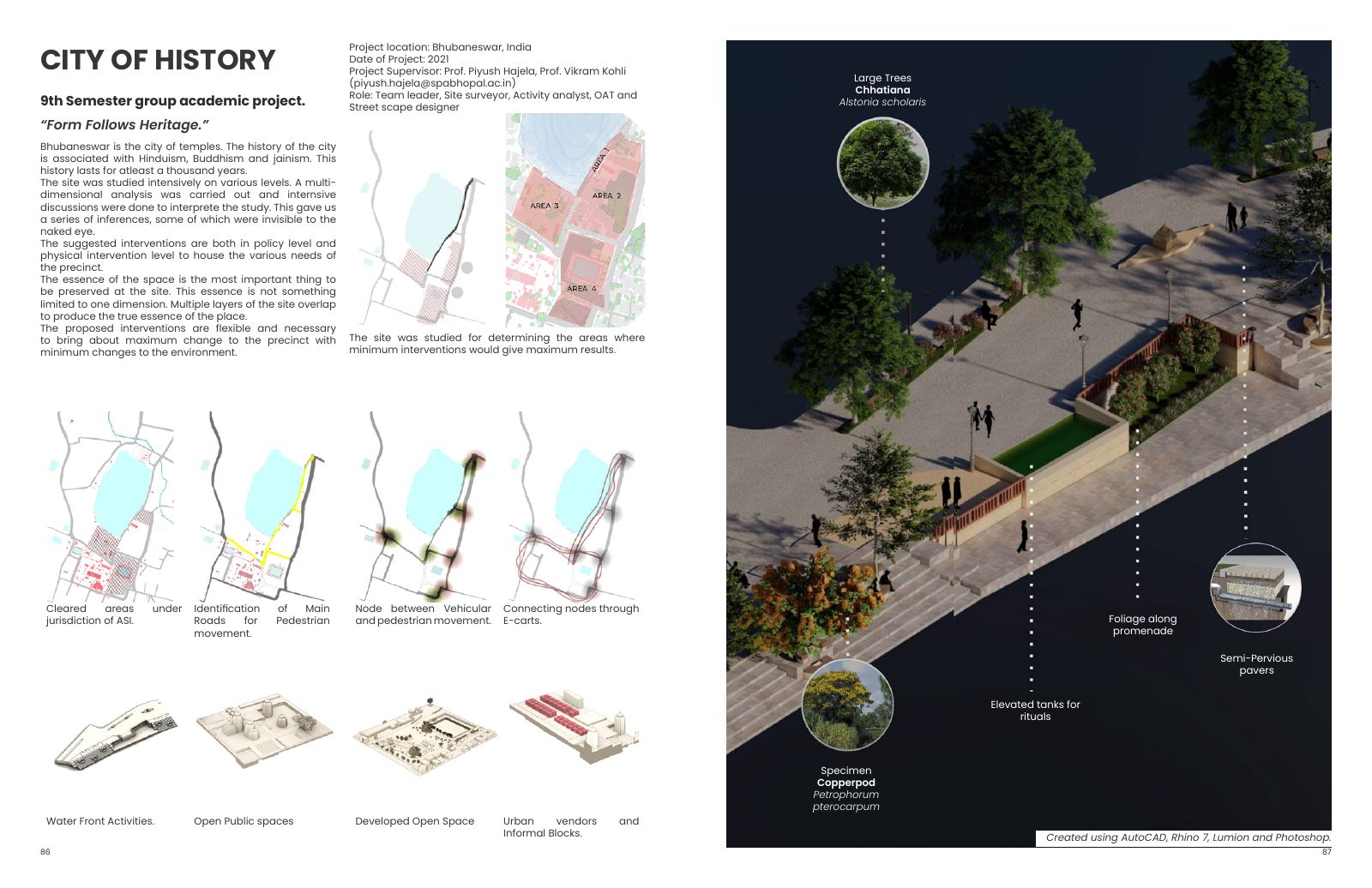
A minimum-change heritage framework for the Lingaraj precinct, shaped by temples, movement, ritual, local enterprise and the water's edge.
Project type
Heritage precinct and public-realm strategy
Portfolio status
Group academic project, 2021
Location
Lingaraj precinct, Bhubaneswar, India
Project overview
Layered history is strengthened through precise public-realm moves.
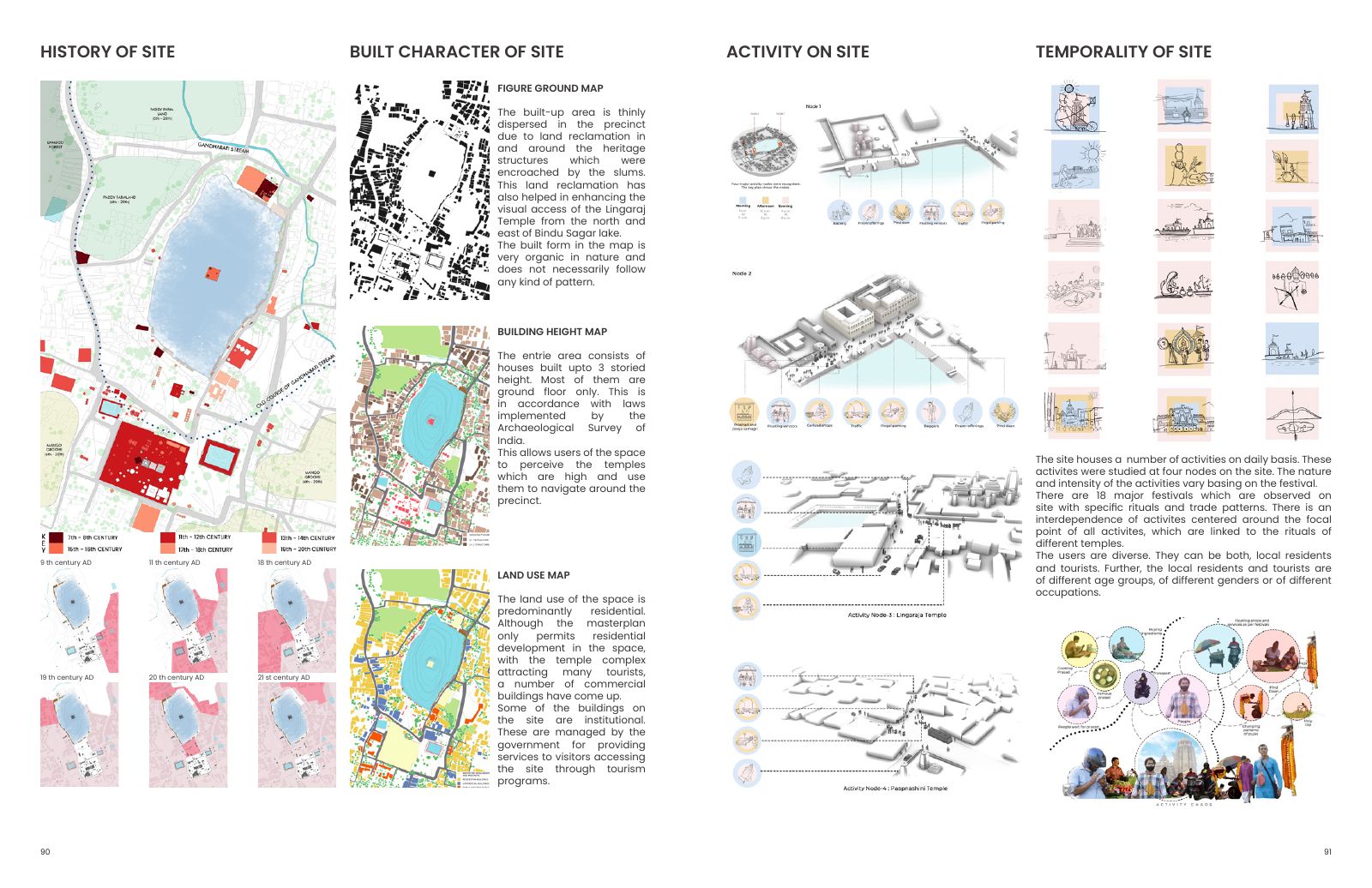
The study maps heritage structures alongside land use, building grain, everyday activity and seasonal movement. It identifies where limited interventions can improve access and interpretation without flattening the precinct’s overlapping character.
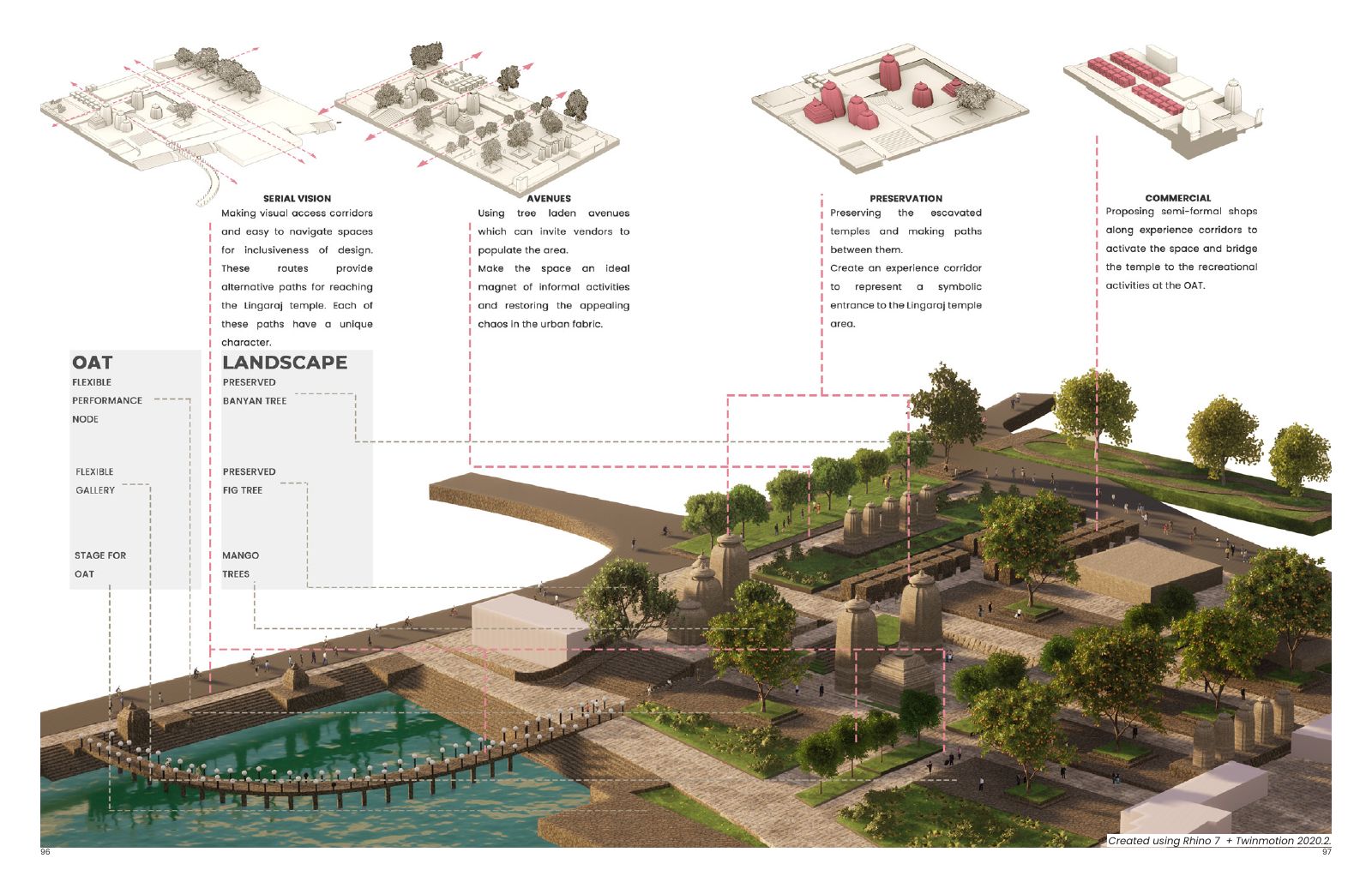
The proposal protects temples and gateways, frames significant views and introduces flexible cultural spaces, vendor opportunities, shaded routes and small green rooms. Waterfront steps and ritual infrastructure are treated as lived civic spaces rather than isolated monuments.
Design priorities
Three ideas carried through the proposal.
01
Minimum intervention protects heritage while improving everyday use.
02
Movement, views and interpretation build a legible cultural route.
03
Vendors, events, landscape and ritual spaces remain part of the precinct’s life.
Portfolio boards
Concept, analysis and design development.
Selected original boards from the reviewed portfolio source.
Heritage precinct premise and minimum-change public-realm strategy.
Site history, building character, activity and temporal patterns.
Preservation, visual corridors, landscape and waterfront interventions.